Best Models to Run on the ASUS Ascent GX10
The ASUS Ascent GX10 runs the same NVIDIA GB10 Grace Blackwell superchip as the DGX Spark — 128GB of unified LPDDR5X at 273 GB/s, 1 PFLOP of FP4 — for about $700 less in August 2026. Both boxes repriced upward in the memory shortage: the GX10 listed $3,999 for the 1TB SKU in August, and the ASUS US store showed $6,999 in September 2026, above the Spark's $4,699. You give up storage, not compute. So every model recipe published for the Spark runs here unchanged, and the headline pick is the same: Qwen 3.6 35B-A3B NVFP4, measured at 91.5 tok/s single-stream on an actual GX10. This guide covers what the price gap actually costs you, which models to run at 128GB, and where the GX10's cheaper build shows up when you cluster.
Building a GB10 OpenClaw rig?
See our AI training options. We'll plan a GX10 or Spark-cluster OpenClaw setup that turns your GB10 boxes into a private AI server for your team.
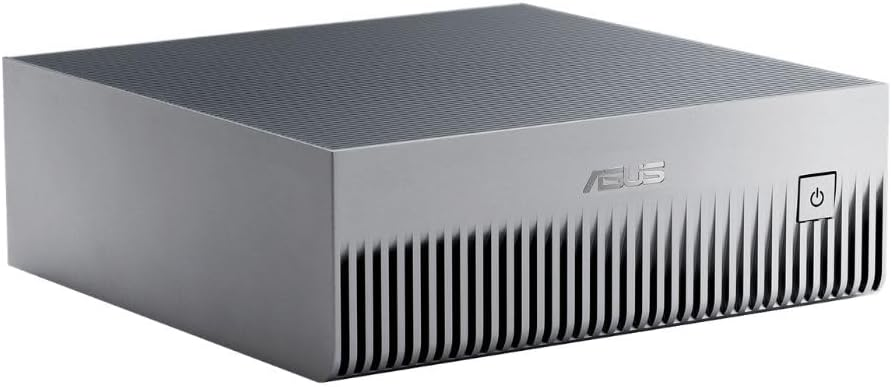
Prefer the NVIDIA-branded box with 4TB storage? The reference machine is the NVIDIA DGX Spark 128GB.
Bottom Line (August 2026)
- Best overall pick — Qwen 3.6 35B-A3B NVFP4. Measured on a real GX10 at 91.5 tok/s single-stream and 707 tok/s aggregate at 64 concurrent, with a 262K context window.
- Best coding model that fits — DeepSeek V4 Flash NVFP4 at a reduced context. Same 128GB budget as the Spark, same result.
- The GX10 trade — you save about $700 as of August 2026 (down from $1,000 at launch; both boxes repriced) and lose 3TB of storage. Compute is identical. Nothing else about model selection changes.
- Clustering works — ConnectX-7 200Gb, two units back-to-back as a 256GB machine, four or more through a switch. Update the BIOS first.
Every number below comes from published GB10 recipes and NVIDIA developer forum reports, mostly vLLM with NVFP4 quantization. Where a benchmark was run on a DGX Spark rather than a GX10, it still applies: the superchip, memory, and bandwidth are the same part.
The Hardware, Briefly
The GX10 is an NVIDIA GB10 Grace Blackwell superchip — a 20-core Arm CPU (10x Cortex-X925, 10x Cortex-A725) next to a Blackwell GPU with 48 SMs, rated at 1 PFLOP of FP4 — with 128GB of unified LPDDR5X at 273 GB/s. It runs DGX OS, ASUS says that is the only tested OS, and it draws 240W from a USB-C adapter in a 150 x 150 x 51 mm chassis.
That 273 GB/s is the constraint, exactly as on the Spark. Dense 70B-class models decode slowly. What wins on this box is MoE models with small active parameter counts (3B-15B active) quantized to NVFP4, Blackwell’s native 4-bit float format, which holds quality near FP8 at half the memory.
What the price gap actually buys
| ASUS Ascent GX10 | NVIDIA DGX Spark FE | |
|---|---|---|
| Chip | GB10 Grace Blackwell | GB10 Grace Blackwell |
| Memory | 128GB LPDDR5X, 273 GB/s | 128GB LPDDR5X, 273 GB/s |
| Storage | 1TB PCIe 4.0 (4TB PCIe 5.0 SKU exists) | 4TB PCIe 5.0 |
| Networking | ConnectX-7 200Gb, 10GbE, Wi-Fi 7 | ConnectX-7 200Gb, 10GbE, Wi-Fi 7 |
| OS | DGX OS | DGX OS |
| Launch price | $2,999 | $3,999 |
| Price, August 2026 | $3,999 (1TB) / $4,699 (2TB) | $4,699 |
| Price, September 2026 | $6,999 (ASUS US store, out of stock) | $4,699 |
Storage is the whole difference. At August 2026 pricing the 1TB GX10 sits about $700 under NVIDIA’s 4TB model, which works out to roughly $233/TB for the storage you are giving up — cheap by NVMe standards, but you are also giving up PCIe 5.0 and Opal encryption on the drive.
Note that the saving shrank. At launch the gap was $1,000; NVIDIA’s Spark went to $4,699 on an official memory-driven MSRP change while ASUS moved the GX10 up too, and the GX10’s own 2TB SKU now costs exactly what a 4TB Spark does. If you were going to spec the 2TB GX10, buy the Spark instead — same money, twice the storage, faster drive. The ASUS argument now only holds at the 1TB SKU.
Best Models on One GX10 (128GB)
| Model | Quant | Context | Speed | Why |
|---|---|---|---|---|
| Qwen 3.6 35B-A3B | NVFP4 | 262K | 91.5 tok/s (C1) | Verified on a real GX10; 370.8 tok/s at 16 concurrent |
| DeepSeek V4 Flash (284B/13B) | NVFP4 | reduced | ~55 typ / 78 peak | Best coding model that fits 128GB |
| Nemotron 3 Nano 30B-A3B | NVFP4 | 131K | ~55-61 tok/s | NVIDIA’s own tune, most stable recipe |
| Gemma 4 26B MoE | NVFP4 | 128K | ~52 tok/s | Best non-Qwen generalist at this size |
| Qwen 3.6 27B | NVFP4 | 256K | ~33 tok/s | Leaves headroom for other workloads |
Our pick: Qwen 3.6 35B-A3B NVFP4. The unsloth NVFP4-Fast build is the one recipe explicitly validated on ASUS hardware — the maintainer states it was tested on a real ASUS Ascent GX10 / NVIDIA GB10 with 128GB unified memory. The stack is vLLM 0.25.0 ARM64, FlashInfer B12X for the quantized MoE, FP8 KV cache, native MTP-3 speculative decoding, 262K context, with tool calling and image input working.
Read the concurrency numbers carefully, because they are the reason to buy a GB10 box over a Mac. Single-stream is 91.5 tok/s. At 16 concurrent requests the machine delivers 370.8 tok/s, and at 64 concurrent it delivers 707.0 tok/s aggregate. If you are serving a team or running multi-agent OpenClaw workloads, that scaling is the product.
Run DeepSeek V4 Flash NVFP4 instead when coding quality beats speed. It tops SWE-bench among open weights and squeezes into 128GB at NVFP4 with a trimmed context window.
One caution on NVFP4 maturity: as of the April 2026 forum consensus, NVFP4 kernels were still landing on GB10, and some builds underperformed their theoretical ~55-60 tok/s. FP8 remains the more predictable path if a recipe misbehaves — a benchmarked Qwen 3.6 35B-A3B FP8 vLLM serving config exists for exactly this reason.
If you use Ollama, switch to vLLM
A user running Llama 3.3 70B on a single GX10 measured vLLM against Ollama directly. vLLM served 82 tok/s generation against Ollama’s 47, 5,847 tok/s prompt processing against 1,268, and 243ms time-to-first-token against 1,412ms. Under 24 concurrent requests the gap widened. Ollama is fine for a first boot; it is not what you should serve from.
Clustering GX10 Units
Each GX10 carries ConnectX-7 200Gb QSFP networking. Two units connect back-to-back with one cable and run tensor-parallel as a single 256GB machine. ASUS states that four or more units cluster through a network switch. That unlocks the same tier ladder the Spark community has mapped:
- 2 units (256GB) — the sweet spot. DeepSeek V4 Flash DSpark at the full 1M-token context, roughly 42 tok/s at 1M and 44-63 tok/s at working contexts with MTP speculative decode. Omni alternatives: Inkling-Small and MiMo-V2.5 Omni, both at 1M context.
- 3 units (384GB) — GLM-5.2 NVFP4+AQLM at about 380K context, including the community vision build. Or DeepSeek V4 Flash on two units with the third free for ComfyUI, embeddings, and small agent models.
- 4 units (512GB) — unpruned GLM-5.2, 744B total / ~40B active, at up to 1M context and about 42 tok/s peak decode.
At the August 2026 price of $3,999 a unit, four GX10s cost roughly $16,000 against about $18,800 in Sparks for the same 512GB. At the September ASUS US store price of $6,999, four GX10s cost about $28,000, so Sparks are now cheaper. The savings still compound with every node, but the compounding is on $700 a unit rather than $1,000, and the whole 512GB cluster now costs what four Sparks cost at launch.
Update the BIOS before you benchmark a cluster. Early GX10 units shipped with SoC firmware that negotiated the second ConnectX-7 slot at PCIe Gen5 x2 instead of x4. A Spark-to-Spark link ran about 220 Gbps while a Spark-to-GX10 link over the affected NIC ran about 163 Gbps, a 25% hit on any NCCL all-reduce pair touching that port. BIOS GX10DGX.0104.2026.0326.1657 restored Gen5 x4 on both slots. Flash first, then test.
Should You Buy the GX10 or the Spark?
Buy the 1TB GX10 if you are building a cluster, if 1TB of local storage covers your model working set, or if you simply want the cheapest route to GB10 compute. Four nodes saves you around $2,800 at August 2026 pricing.
Buy the DGX Spark if you fine-tune, hoard checkpoints, or want PCIe 5.0 storage with Opal encryption. Deleting models to free disk space is a worse daily experience than most people expect, and 4TB removes the problem entirely.
Buy neither if you will only ever run one box for single-user chat and 96GB of memory is enough. A Mac Studio has roughly twice the memory bandwidth (546 vs 273 GB/s on M4 Max), so dense models decode faster there — but note that as of August 2026 Apple caps the M4 Max Studio at 64GB and the M3 Ultra at 96GB, so you cannot actually buy a Mac that matches the GX10’s 128GB. The GB10 platform wins on CUDA, on NVFP4 and vLLM tooling, on concurrent throughput, and on clustering — none of which a Mac can match.
See Also
- Best Models to Run on NVIDIA DGX Spark — full cluster-by-cluster breakdown on the same silicon
- Best Local LLMs for 128GB RAM — the Mac-side view of this memory tier
- Best Local LLM by GPU (hub) — per-GPU picks
- Why Is My Local LLM So Slow? — the bandwidth math behind 273 GB/s
- Best Local Models for OpenClaw — model-first guide
- Jetson Thor vs DGX Spark — the deploy-vs-develop split across NVIDIA’s two 128GB boxes
Need OpenClaw fixed live?
Remote rescue sessions for gateway, auth, tunnel, VPS, and model access problems.
See Rescue Session