Best Models to Run on AMD Ryzen AI Max+ 395 Boxes
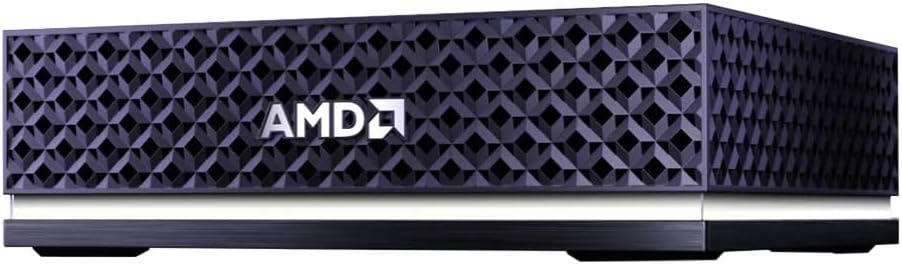
The Ryzen AI Max+ 395 (Strix Halo) put 128GB of unified memory in a 2-liter box. That box cost about $2,000 at launch; as of August 2026 the memory shortage has taken a Framework Desktop 128GB to roughly $3,449 and in September 2026 the cheapest in-stock 128GB box is about $3,500, against $4,699 for a DGX Spark. Strix Halo is still the cheapest 128GB, but the gap is now about 25 percent rather than the 2x it used to be. The other catch is bandwidth: 256 GB/s theoretical, ~210-220 GB/s real. That number decides everything. Sparse MoE models fly (Qwen3-30B-A3B ~100 tok/s, gpt-oss 120B in the 31-55 tok/s range), dense 70B crawls at ~5 tok/s, and prefill on long prompts is the weak spot nobody puts in the marketing. Here is what to actually run, and where the AMD software stack still hurts.
Building a Strix Halo OpenClaw rig?
See our AI training options. We'll plan a Ryzen AI Max+ OpenClaw setup that turns your mini-PC into a private AI server for your team.
Bottom Line (August 2026)
- Daily driver — Qwen3-30B-A3B or Qwen3-Coder 30B-A3B at 4-bit: ~100 tok/s and ~98.5 tok/s on the Vulkan RADV backend. This is the model that makes the box feel fast.
- Maximum capability — gpt-oss 120B MXFP4, reported between 31 and 55.6 tok/s depending on backend and build. It fits inside the GPU allocation and is the best reason to buy 128GB.
- Long context — Llama 4 Scout (109B total / 17B active, Q4_K_M, 60.9GB) at ~18.3 tok/s, and AMD documents it running at a 256K context window with Flash Attention on and a Q8 KV cache.
- Do not bother — dense 70B. Llama 3.3 70B Q4 lands near 5 tok/s. It fits; it is not interactive.
- Run Linux. The Windows stack sits roughly 20-30% below the Linux Mesa RADV Vulkan path, and Linux unlocks ~110GB of GPU memory instead of Windows’ 96GB cap.
The Hardware, Briefly
Strix Halo is one chip with a 256-bit LPDDR5X-8000 bus — four times the width of a normal Ryzen APU. That gives 256 GB/s theoretical bandwidth, measured around 210-220 GB/s under real mixed load. All 128GB is unified, so the iGPU addresses model weights directly with no PCIe copy.
Bandwidth is the whole story. Decode speed is roughly bandwidth divided by bytes read per token. A dense 70B at Q4 reads ~40GB per token, so ~215 GB/s gives you ~5 tok/s and no software fix changes that. A MoE model with 3B active parameters reads a fraction of that, which is how the same box hits 100 tok/s. Buy this machine to run sparse models.
The boxes shipping it, with prices checked August 2026. Every number here has moved up during the 2026 DRAM shortage, and several of these vendors have said publicly that they will move again — treat these as a snapshot, not a price list:
| Box | 128GB price (Aug 2026) | Note |
|---|---|---|
| Framework Desktop | ~$3,449 | Was $1,999 at its Feb 2025 launch. +73%, almost entirely RAM and storage cost. Standard-parts chassis. The 192GB model is expected above $4,500 |
| GMKtec EVO-X2 | $3,499.99 (1TB) / $3,649.99 (2TB) | Vendor store, in stock, 2026-09-17. The August $1,999.99 price was sold out. The store shows a notice that another increase is coming |
| Beelink GTR9 Pro | $1,985 presale / $2,399 list | Beelink has said next-batch pricing rises August 15, 2026 on memory costs. The 128GB + 4TB SKU is $4,349 |
| Minisforum MS-S1 Max | $3,799 (2TB) | Vendor store, in stock, 2026-09-17. Launched at $2,299 |
| HP Z2 Mini G1a | Enterprise pricing | Buy this only if you need a support contract |
| AMD Ryzen AI Halo dev platform | check current listing | AMD’s own developer box; the widely quoted $3,999 predates the 2026 hikes |
The Framework line is the one to notice. It was the poster child for cheap 128GB and it has nearly doubled. If you read a 2025 guide recommending it at $1,999, that recommendation was priced against a machine you can no longer buy at that price.
What to Run
| Model | Quant | Speed | Why |
|---|---|---|---|
| Qwen3-30B-A3B | IQ4_XS | ~100 tok/s | Fastest capable assistant on the box (Vulkan RADV) |
| Qwen3-Coder 30B-A3B | Q4_K_S | ~98.5 tok/s | Same speed, tuned for code — the OpenClaw pick |
| Qwen 3.6 | Q4_0 | ~81 tok/s | ~63 tok/s on the balanced build |
| gpt-oss 120B | MXFP4 | 31–55.6 tok/s | Biggest brain that fits; llama-server Q4_K_M reports 53.4 tok/s |
| Llama 4 Scout (109B/17B) | Q4_K_M, 60.9GB | ~18.3 tok/s | 256K context with FA + Q8 KV per AMD |
| Qwen3-235B-A22B | 4-bit | ~8–11 tok/s | Fits, but 22B active is too many for this bandwidth |
| 7B–13B dense | Q4 | 30–45 tok/s | Fine, but you did not need 128GB for these |
| Llama 3.3 70B dense | Q4 | ~5 tok/s | Bandwidth wall. Batch jobs only |
Our pick: Qwen3-Coder 30B-A3B for agent work, gpt-oss 120B when quality matters more than latency. The spread between them is the real decision on this hardware. Scout’s 18.3 tok/s hits about 73% of the theoretical ceiling for a 17B-active model at 215 GB/s, which tells you the runtime is already close to optimal — the silicon is the limit, not the software.
Where the Software Still Hurts
This is the part the spec sheet hides.
Prefill is the weak spot. Decode numbers get quoted everywhere; prompt processing does not. Feeding a long prompt takes seconds to minutes at large context. Community testing puts ROCm 7.x nightlies at roughly 502 tok/s prompt processing — best in class for this box, and still an order of magnitude below a discrete GPU. If your OpenClaw workflow re-reads a large codebase every turn, you will feel this before you feel decode speed.
ROCm is preview-grade on this chip. Strix Halo is gfx1151, and getting ROCm running still means setting HSA_OVERRIDE_GFX_VERSION=11.5.1. The pragmatic split right now: Vulkan RADV for token generation, ROCm nightlies for prompt processing. Most people run llama.cpp or Ollama on Vulkan and skip the full ROCm stack entirely.
Windows costs you 20-30% versus Linux RADV, plus 14GB of addressable GPU memory. If you buy this box and run Windows, you bought a slower box.
Agent tooling has sharp edges. Ollama v0.14.0 (January 2026) added Claude Code compatibility, but its OpenAI compatibility layer ignores tool_choice, which can send agents into loops. Test your harness before you trust it with a long run.
Strix Halo vs DGX Spark vs Mac Studio
All three sit at 128GB. They are not the same machine.
| Ryzen AI Max+ 395 | DGX Spark | Mac Studio | |
|---|---|---|---|
| Price at this tier (Aug 2026) | ~$2,000–$3,449 for 128GB | $4,699 for 128GB (was $3,999) | no 128GB option in August (M5 Max 128GB since 25 Aug) — M4 Max maxed at 64GB from ~$2,499; M3 Ultra is 96GB only, from ~$5,299 |
| Real bandwidth | ~215 GB/s | ~273 GB/s | 546 GB/s (M4 Max) |
| Ecosystem | Vulkan / ROCm preview | CUDA, NVFP4, vLLM | MLX, works out of the box |
| Clustering | USB4/Thunderbolt RPC (~9.4 Gbps) | 200Gb ConnectX, real TP | None |
Buy Strix Halo for the most unified memory per dollar, if you will run MoE models on Linux and can tolerate rough edges. It used to be roughly half the price of the other two; in September 2026 the cheapest in-stock SKUs are about 75-80% of a DGX Spark, and the Framework build is about 73% of one. Still the cheapest 128GB, but the price argument no longer carries the decision on its own — if you were choosing Strix Halo purely because it was half price, re-run that comparison.
Buy the DGX Spark if you want CUDA tooling and a growth path — two Sparks link over 200Gb ConnectX into a real 256GB tensor-parallel machine. Strix Halo’s distributed option is llama.cpp RPC over a ~9.4 Gbps Thunderbolt link, which works but is a different class of interconnect.
Buy the Mac Studio if bandwidth and silence matter more than price . 546 GB/s (M4 Max) is 2.5x Strix Halo, so dense models that crawl on AMD are usable on the Mac. Apple replaced the line on 25 August 2026: the new M5 Max Mac Studio configures to 128GB, and the M4 Max and M3 Ultra are discontinued. See Best Local LLM for Mac Studio for the new tiers.
The honest summary: Strix Halo is still the value play, and the value is thinner than it was. At roughly $2,000-3,449 for 128GB (August 2026) it remains the cheapest way to hold a 120B-class model in memory, and it is now the only desktop way to hold one in unified memory under $4,500. You pay for that with prefill speed and a software stack you have to babysit.
See Also
- Ryzen AI Max+ PRO 495 192GB: Wait or Buy 128GB? — what the 192GB Gorgon Halo boxes add, and what they do not
- Best Models to Run on NVIDIA DGX Spark — the CUDA alternative at this memory tier
- Best Local LLMs for 128GB RAM — model picks across the whole 128GB tier
- AMD R9700 vs RTX 3090 for Local LLM — discrete AMD, if bandwidth matters more than capacity
- Best Local LLM for RX 7900 XTX — the ROCm discrete-GPU path
- The Cheapest Way to Run a 70B Locally in 2026 — where this box ranks (and why dense 70B is its weak spot)
- Is the DGX Spark Worth $4,699? — the twice-the-price rival, judged honestly
- DGX Spark Price: Every GB10 Box Compared — the $4,699 list price, its February increase, and every OEM GB10 box beside it
- Which Ryzen AI Max+ 395 Mini PC Should You Buy? — which box to buy, once you know which models you want
Need OpenClaw fixed live?
Remote rescue sessions for gateway, auth, tunnel, VPS, and model access problems.
See Rescue Session